



“A cigarette and carrot juice / And get yourself a new tattoo / For those sleeveless days of June / I'm sitting on the Cafe Zinho steps / I haven’t got the courage yet / I haven’t got the courage yet”
(Cracker, “Big Dipper”)


NINE HOURS. FOUR LINES. A SIMPLE TRUTH.
Another month, another concert with Angie.
She was two years behind me in high school. We vaguely knew each other from debate and forensics, and connected through music — a radio show friends and I hosted on WDCE; a fanzine I started publishing my junior year; rides to see bands, downtown and out of town.
Which is how I found myself in my oldest friend’s car this past week, as she navigated construction traffic and an hour-long Zoom call with a key client. I mostly stared out the window and winced. I did something to my neck last weekend and have been in intense pain for days. Which made our five hours in the car and four hours standing on the concrete floor at The Norva waiting for friggin’ Echo & the Bunnymen a weird sort of self-flagellation.
The band took the stage two hours late, and forty-one years since Angie and I first saw them together in DC.
We spent nine hours together. We don’t do that much. Life, you know.
But here’s the thing: it was an easy nine hours. We talked about high school, we did “how many years since” math, we talked about our kids, and work and baking and gardening. And we were quiet when we ran out of things to say. And it was fine.
We didn’t problem solve. We didn’t get existential, or excavate old wounds, or chase forgotten what-ifs. We watched an eclectic mix of middle-aged people in black t-shirts relive 1985 next to teen Goth girls and annoying golf pro bros — all enjoying the show for different reasons.
And then we drove home.
The closest we got to emotional live wires? Somewhere around Williamsburg in the pitch of dark I said, “Your mom was awesome.” And she was quiet for a second and said, “Yeah. She was.”
Another recent drive to Williamsburg. Construction traffic. This time it was my eleven-year-old, Jack.
We were talking about how our weeks together would change when Thea started college. I asked him what he liked about spending time with me. He thought for half a second, and then rattled off:
You talk a lot
You’re mostly funny
You make me think hard about things
You take me and Thea on adventures
His words. We unpacked them a little, but not much. And then we drove go karts, and played video games and mini golf.
Nine hours with Angie. Four lines from Jack.
Neither my oldest friend nor my youngest child ever indicate that our relationship should be anything more, or less, than it is.
Two people who are perfectly content to let me be exactly who I am.
Which makes me wonder why it’s so hard for me to believe them.

GO SLOW
I guess the morning equivalent of NPR’s “driveway moments” are shower moments.
I had one of those moments this past week when Steve Inskeep conducted an interview with theatre actor André De Shields.
Maybe it was hearing that the 80-year-old actor is nominated for his role in “CATS: The Jellicle Ball” that caught my attention initially, but it was De Shields’ voice that drew me in. His thoughtfulness kept me.
His mission, he said, was centered around black elegance, senior citizens, and HIV survivors. It is a powerful mission.
And his poetic language — “I want every African American to be able to go to the mirror and say, I shall never forsake you. I shall always cherish you. I will do with you what the spring does to the cherry tree.” — makes his mission all the more powerful, and truly lovely.
And then there was his first Tony acceptance speech, where he said, “Slowly is the fastest way to get to where you want to be.” De Shields and Inskeep unpack that together:
DE SHIELDS: I’d love to expand on that because so many people have been affected by it. Slowly is the fastest way to get to where you want to be. Most people misunderstand that and say slowly is the quickest way to get to where you want to go. That is not what I said, and it’s certainly not what I meant. Now, because I am 80, I remember when fast meant dependable, meant secure.
INSKEEP: Stand fast.
DE SHIELDS: Ah, there we go. That’s what I’m talking about when I say slowly is the fastest, parentheses, surest way to get where you want to be. Not go.
Stand fast. Not go.
That was the shower moment. The piece ended, and I stood with the gentle needles of water on my back and the idea — Stand fast. Not go. — settling into my thoughts.
Be dependable. Be present.
An echo of feedback from my friend Debra at Georgetown a lifetime ago: “My wish for you is that you didn’t feel you had to try so hard.” To not go, but to be.
Midway into a year where I’ve been rushing to tend — to my life, to my people, to the joys I keep passing by — André De Shields wanders into my bathroom and reminds me to stand fast, not go.

I CHI. YOU CHI. WE ALL SCREAM FOR TAI CHI.
Once you realize you’re never going to be simultaneously fluid and body correct, Tai Chi is pretty easy.
Life has been pretty frenetic, and my week-long case of cervical radiculitis was slowly traveling from my neck and shoulder down into my right arm. I decided to really let it sink in with long drives to Staunton and Norfolk, way too much sitting — writing, at dinner, in meetings — and then four hours standing on the concrete floor at The Norva.
The ortho doctor confirmed what I suspected — pinched nerve — and gave me too many drugs, and a script for physical therapy. And, no, a Saturday morning of tai chi with a group of strangers would not be a problem. But, yes, the four day road trip with the kids might be.
I arrived early to tai chi. And waited. And then shrugged my shoulders, winced at the pain, and left. I saw my friends Alan and Joanna at the coffee shop about the time my detective friend, Marlene, texted about a music thing, an art show, yard sales, and “looks like it’s at 10.” My tai chi thing. So, I drove back to Maymont.
Tai chi was lovely. And complicated in more ways than yoga, which I also once found complicated. Stance. Form. Posture. Movements. Deeper. Slower. More fluid. Lower. And I kept hitting my head on a tree branch.
I triangulated my gaze between the instructor and two other students — one clearly down with the moves, the other provided a different angle on hands, wrists, elbows, and how the hell do you move your foot when you pivot. By the end, I thought I understood the broad contours — by which I mean, the pieces scattered in loose relationship.
A few hours later, and I’ve already forgotten what I learned. My arm and neck are aching again. But I understand the shape of the thing now.
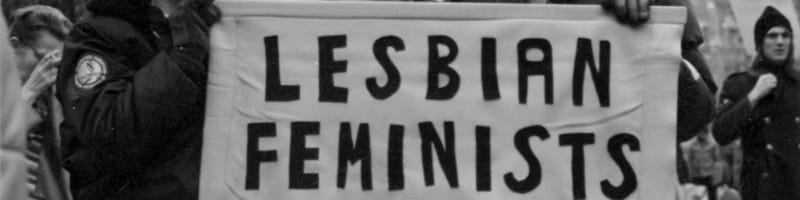
BETH MARSCHAK
When I first met Beth Marschak, I didn’t know just how instrumental she was as a force in our community.
Beth died earlier, and unexpectedly, this month at the age of 75. The founder of Richmond Lesbian Feminists in 1975, she was a documentarian and historian — and a tireless public health worker who worked at the Virginia Department of Health during the height of the HIV/AIDS epidemic. RVA Magazine has a piece on Beth from last fall’s Virginia Pride Festival Guide. It’s a really nice read — about Beth, and about yet another slice of our community’s history that is under-told.
SHUT UP & WRITE CRONE FICTION
Coming home from an early morning walk, a crisp English accent described an upcoming interview with a British author of what I heard as “crone fiction.”
It was, of course, crime fiction, but I began to think about the shape of a genre of fiction writing specifically crone-centric.
Not the polished script of Only Murders in the Building or The Boroughs, but a clumsy tale of the 90-year-old great aunt I had when I was seven with her cramped, mysterious kitchen and the creaky wooden stairs that led to the dark basement where the washing machine screeched endlessly.
I mean, we all know what the dreary day in the life of an aging crone might look like, but what about the secret, glamourous moments of aging in a ramshackle house littered with half-filled bottles of toilet water, endless boas, and memories of seeing Buddy Holly on stage and Rebel Without A Cause on screen at the Bijou.
I wonder what that novel reads like as a can’t-put-down, summer beach book…